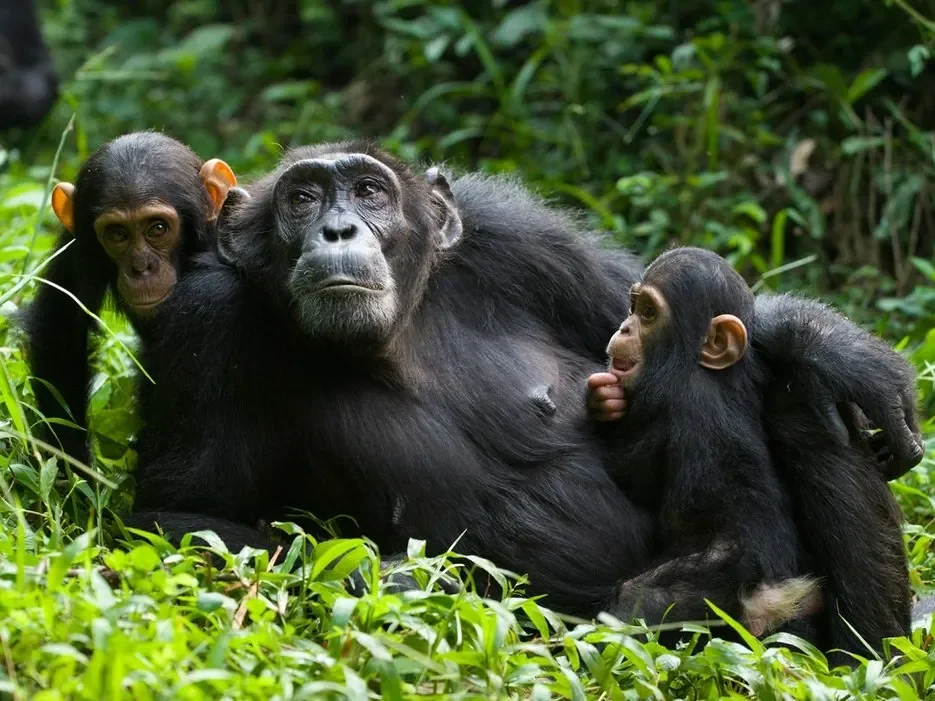
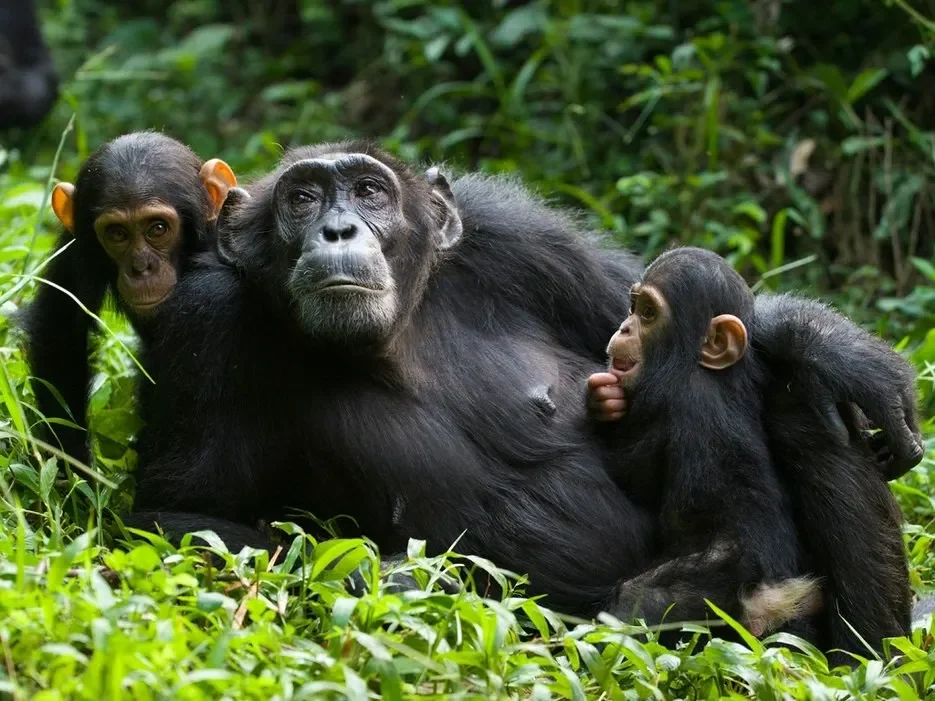
Chimpanzee trekking, forest walks and time in the Bigodi wetlands.
Kibale National Park contains one of the loveliest and most varied tracts of tropical forest in Uganda. This is home to a host of forest wildlife, most famously 13 species of primate including chimpanzee. Forest cover predominates in the northern and central parts of the park on the elevated Fort Portal plateau. Kibale is highest at the park’s northern tip which stands 1590m above sea level.
Northern Kibale is also the wettest area, receiving a mean annual rainfall of up to 1700mm, mostly during March-May and September-November. The climate is generally pleasant with a mean annual temperature range of 14-27oC.
Temperatures are highest (and rainfall lower) in the south where the terrain drops down onto the hot rift valley floor and forest gives way to open grassland.
Gazetted in October 1993, the 766km squared Kibale Forest National Park extends southwards from Fort portal to form a contiguous block with the Queen Elizabeth National Park. Interspersed with patches of grassland and swamp, the dominant vegetation type is rainforest, spanning altitudes of 1,100-1,590m and with a floral composition transitional to typical eastern Afro-montane and western lowland forest.
Kibale Forest National Park, together with the nearby Ndali-Kasende Crater Lakes, are close to being an independent traveller’s dream, blessed with the tantalizing combination of inexpensive accommodation, easy access, wonderful scenery and a remarkable variety of activities. The park is highly alluring to nature lovers for the opportunity to view a wide range of forest birds and track chimpanzees (as well as viewing a wide range of other primates). Though the scenic appeal of the region remains undiminished, the rising cost of chimp tracking, and the conversion of the old budget Kanyanchu River Camp to an upmarket tented camp, mean that the national park is no longer the mandatory backpacker destination it was a few years ago.
Kibale’s varied altitude supports different types of habitat, ranging from wet tropical forest (moist evergreen forest) on the Fort Portal plateau, through dry tropical forest (moist semi deciduous), to woodland and savanna on the rift valley floor. Around Kanyanchu, in the central part of the park, the high forest contains a mixture of deciduous and evergreen trees with the evergreen species dominant. Trees rise to over 55m and exhibit a semi-closed canopy of stratified tree crowns. The undergrowth is sparse with shade tolerant herbs, shrubs, a variety of ferns and broad leaved forest grasses. 351 tree species have been recorded in the park.
Our local team will help you choose the right time, pace and places to stay for your journey.
Take me there